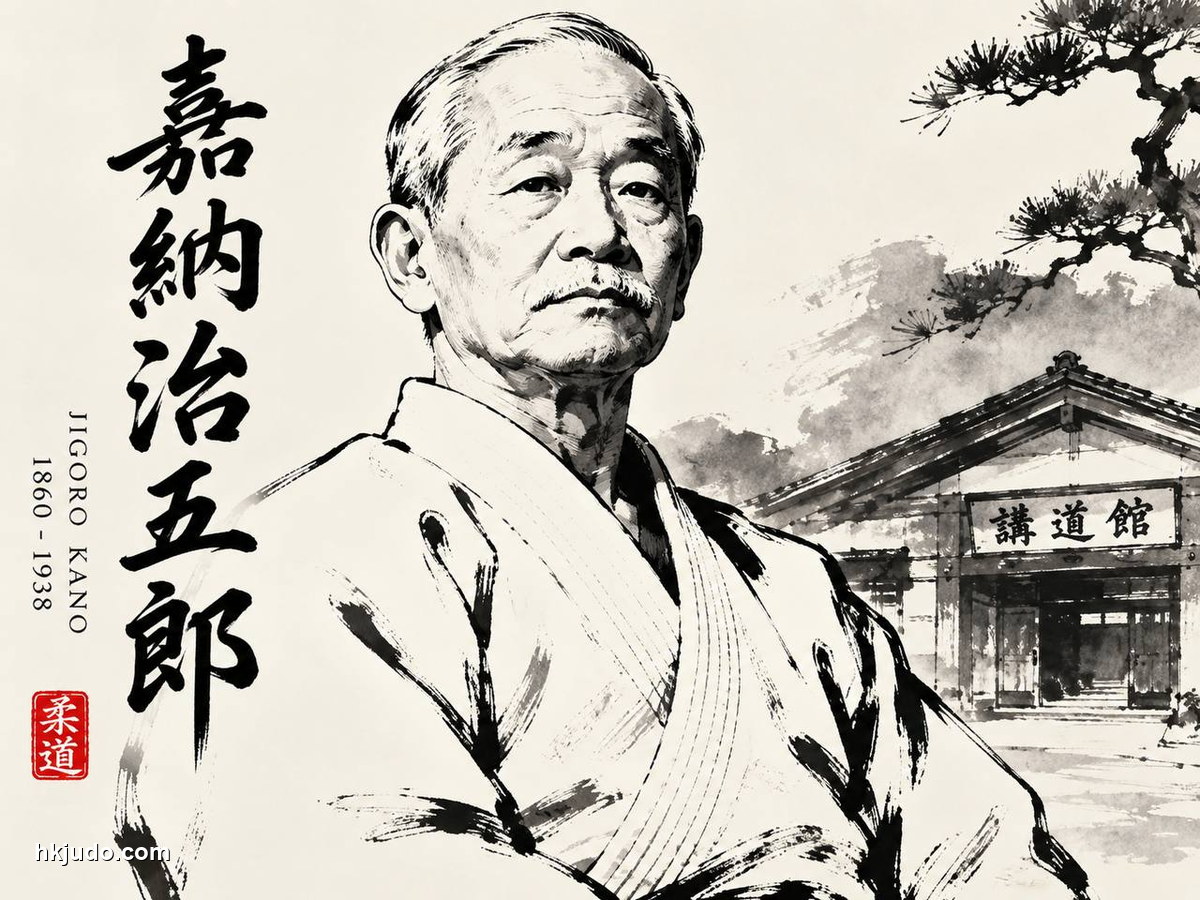

Every year on 28 October the judo world marks World Judo Day, the birthday of Jigoro Kano, who founded judo in Tokyo in 1882.
Kano did not set out to invent a sport. He took the throwing and grappling he had learned from jujutsu and rebuilt it around two principles: the most efficient use of energy, and mutual welfare and benefit. A person thrown learns to fall, a person throwing learns to control, and both are expected to do it with courtesy. That is why judo has sat in school curricula for more than a century, and why it has been adapted for children, for older judoka, for blind and deaf athletes and for people with intellectual disabilities.
The day itself is recent. The International Judo Federation launched World Judo Day in 2011, with Respect as the first theme. Themes have followed every year: Judo for All in 2012, Perseverance in 2013, Honour in 2014, Unity in 2015, Judo for the World in 2016, Courage in 2017 and Friendship in 2018. The 2026 theme is Belonging, which the federation describes as the question of whether a person is not merely allowed onto the tatami but recognised, respected and able to stay.
The sport's reach grew from one dojo. The Kodokan opened in 1882; judo joined the Olympic programme at Tokyo 1964, with women's events added in 1992. The IJF now governs a sport practised in every region of the world, and its development work runs through schools, coaching education and adapted judo.
World Judo Day is not a competition date. Clubs mark it with open sessions, demonstrations and community work, and the federation uses the theme to ask what the sport still owes the people inside it.
Kano's own summary of judo was shorter than any of this: maximum efficiency, mutual welfare, and the idea that what is learned on the tatami should be of use outside it. World Judo Day is the one day of the year when the sport says that out loud, to everyone else.