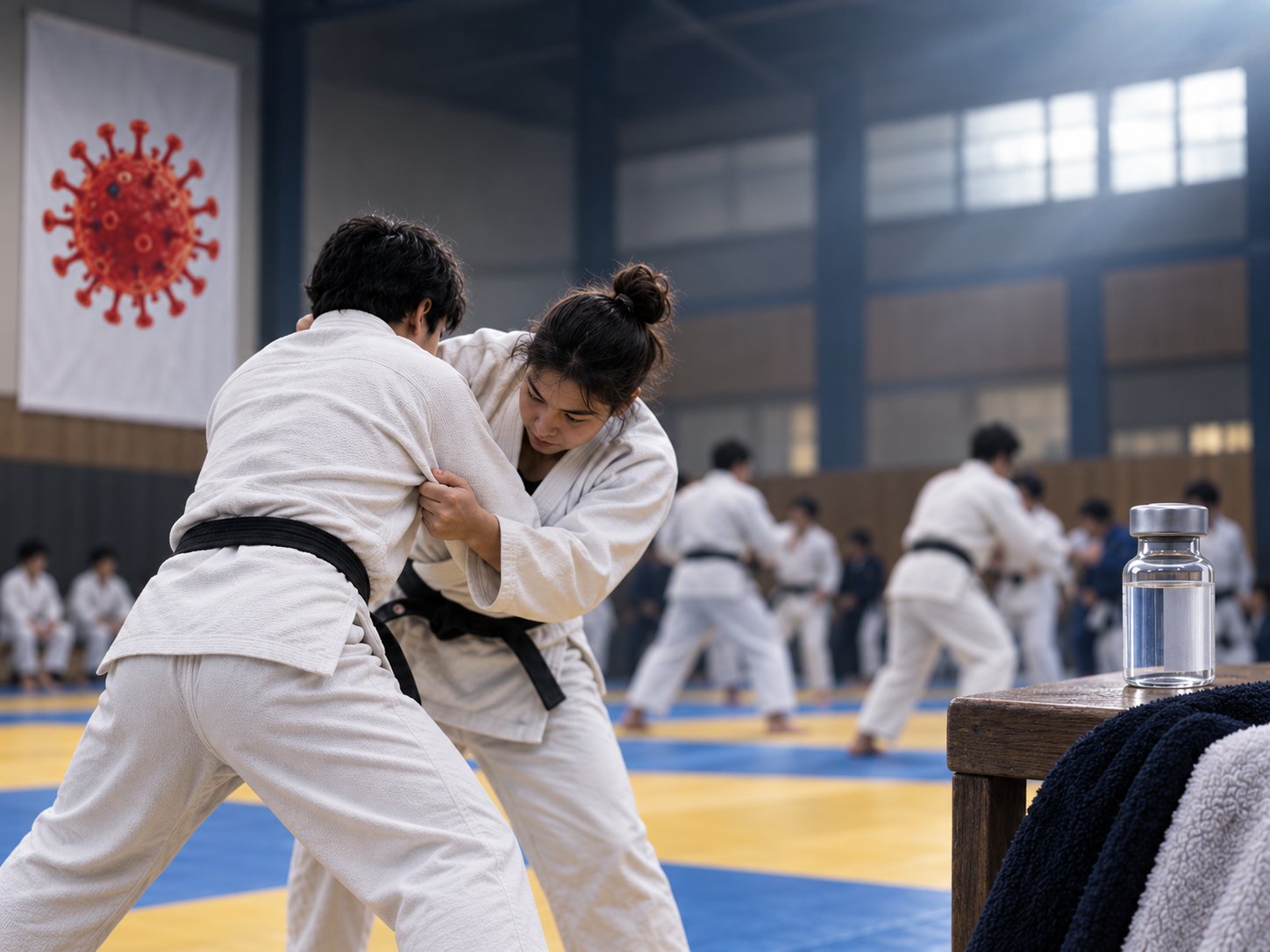
Measles cases in the United States have reached their highest level in 35 years. Faced with a disease that has had a well-established vaccine for decades, vaccine hesitancy and anti-science sentiment are once again forcing society as a whole to bear risks that should have been avoidable. For judo, a close-contact indoor sport, this is an issue that deserves particular attention.
According to the latest figures from the U.S. Centers for Disease Control and Prevention (CDC), as of September 3, 2026, the United States had recorded 3,134 confirmed measles cases this year, the highest level in more than 35 years. Around 94% of patients were unvaccinated or had an unknown vaccination status, and 248 people required hospitalization.
This is not a newly emerged virus for which medicine has no answer. Measles vaccination has been used in the United States since the 1960s. Current CDC data show that one dose of the MMR vaccine is about 93% effective at preventing measles, while two doses are about 97% effective. The CDC also states that the MMR vaccine is very safe, with serious side effects being extremely rare.
What is truly worrying is not that science lacks an answer, but that some people continue to reject decades of medical evidence. Some may describe this phenomenon as a decline in “intelligence” in American society. A more accurate description is a decline in public judgment and trust in scientific evidence.
And the consequences of that choice never affect only the person making it.
For Judo, This Is Not Someone Else’s Public Health Story
Measles is one of the most contagious diseases in the world. The CDC states that when a person with measles is around people who are not immune, up to 90% of them may become infected. Measles spreads mainly through the air: the virus can remain infectious in the air for up to two hours after an infected person has left the room, and a patient can be contagious for about four days before the characteristic rash appears.
When a parent chooses, based on personal beliefs, not to vaccinate a child, the risk may not be limited to that child. It can also extend to other children on the same tatami, coaches, parents, and people who cannot be vaccinated because of age or medical reasons.
“My Body, My Choice” Is Not the Whole Story
Personal freedom is important, but infectious disease has one very simple characteristic: it does not respect your personal choice. A person can choose what to believe, but a virus does not change the way it spreads because of someone’s political position, a video seen online, or distrust of government.
The MMR vaccination rate among U.S. kindergarten children has fallen from 95.2% in the 2019–2020 school year to around 92.4% in 2025–2026, below the roughly 95% level generally considered necessary to maintain population protection against measles. The CDC estimates that around 280,000 kindergarten children were at risk of measles infection in the 2025–2026 school year alone.
The Pan American Health Organization (PAHO) has said the outbreak, beginning in January 2025, may involve sustained transmission, and the country’s status as having eliminated measles will be formally reviewed in November 2026. A country that declared the elimination of endemic measles transmission in 2000 is, 26 years later, having to discuss whether it may lose that public health achievement. This is not medicine going backward. It is human choices pushing society backward.
Judo Teaches “Jita Kyoei”
Judo has never been only about throwing an opponent. One of Jigoro Kano’s core principles is Jita Kyoei, mutual welfare and benefit: our own progress should not come at the expense of others, but should contribute to the well-being of both ourselves and those around us.
From that perspective, vaccination is actually a very “judo” issue. If someone cannot be vaccinated for medical reasons, society should protect that person. But if a healthy person refuses a safe and effective vaccine purely because of online misinformation or political beliefs, and then enters a dojo where children and adults spend long periods in close contact, that decision is no longer entirely private. The risk has been carried onto someone else’s tatami.
For overseas athletes preparing to travel to the United States for training or judo competition, the 2026 measles figures are also an important reminder: checking one’s MMR immunity record is a reasonable part of risk management before taking part in large indoor sporting events.
Judo teaches us to take care of our own bodies. But judo also teaches us not to make others bear risks that could have been avoided because of our own choices.