Hong Kong begins a new school year on 1 September 2026. For many families, that means returning to routines, uniforms, classrooms and homework. For children who spent part of early childhood or the first years of primary school under pandemic restrictions, however, going back to school may also mean something less visible: continuing to rebuild the ordinary social and physical experiences children normally acquire through daily life.
A growing body of Hong Kong and international research suggests that prolonged school disruption, online learning, social distancing and mask use may have altered some children's opportunities for face-to-face communication, play, movement and exposure to everyday social cues.
Hong Kong study: speech is not only heard, it is also seen
A study published in April 2026 in Humanities and Social Sciences Communications compared two groups of Cantonese-speaking children aged five to six, one in Hong Kong and one in mainland China. The researchers examined audiovisual speech perception: how children combine what they hear with visual information such as mouth movements.
Hong Kong children, who had experienced longer and stricter social-distancing and mask requirements, showed reduced reliance on visual information in some tasks, particularly under noisy conditions. The researchers suggested that changes in the social environment during the pandemic may have contributed to differences in the development of audiovisual speech processing.
The finding should not be read as proof that Hong Kong children have poorer overall language ability, nor does the study establish pandemic measures as the sole cause. It points to a broader developmental point: during sensitive years, children learn from faces, mouths, natural conversations and repeated exposure to different speakers.
Teachers often noticed social difficulties more than academic loss
Another Hong Kong study, focusing on young children with special educational needs, interviewed 21 educators about their experience of pandemic school closures and the return to face-to-face learning. Educators reported that, for some children, social development appeared to have been affected more noticeably than academic progress. Their observations included difficulties with sharing, problem-solving, verbal expression, managing anger, emotional regulation and self-management.
Teachers also described children taking longer to settle after returning to school, heightened separation anxiety in some cases, and more conflict during unstructured playground play.
The study mainly concerned children with special educational needs and was based on educators' observations, so its findings should not be generalised to every child in Hong Kong. It nevertheless illustrates something fundamental: social skills are not learned only by explanation. They are practised through repeated, real interaction.
Hong Kong kindergarten data point to sensitive developmental periods
A separate 2025 Hong Kong study followed 235 children aged four to five from ten kindergartens. By comparing groups affected by school disruption at different stages of kindergarten, the researchers found that disruption during certain developmental periods was associated with more noticeable differences in later physical performance.
The study did not conclude that every child exposed to school closures would suffer long-term impairment. Rather, it highlighted that some periods of childhood development may be particularly dependent on regular schooling, movement and everyday activity.
A Japanese study of more than 40,000 children found language differences
In June 2026, researchers in Okayama City published an analysis of health-check data from 40,898 three-year-olds. Compared with the pre-pandemic period, children assessed during the pandemic had a higher adjusted risk of physician-determined language difficulties, with a risk ratio of 1.52. Some language indicators also differed more clearly among children cared for mainly at home than among those attending preschool.
The authors did not reduce the findings to a single cause. They argued that future public-health responses should pay closer attention to preserving young children's opportunities for social interaction and early education.
Children may need more than academic catch-up
Post-pandemic education discussions often focus on learning loss, exam performance and missed curriculum. Yet childhood development happens far beyond the desk. Children learn to wait, take turns, accept refusal, resolve conflict, regulate emotion, read expressions, judge distance and control force while interacting with other people. They also learn through running, jumping, falling, standing up again and cooperating physically.
Many of these experiences are difficult to reproduce fully through a screen.
Where does judo fit?
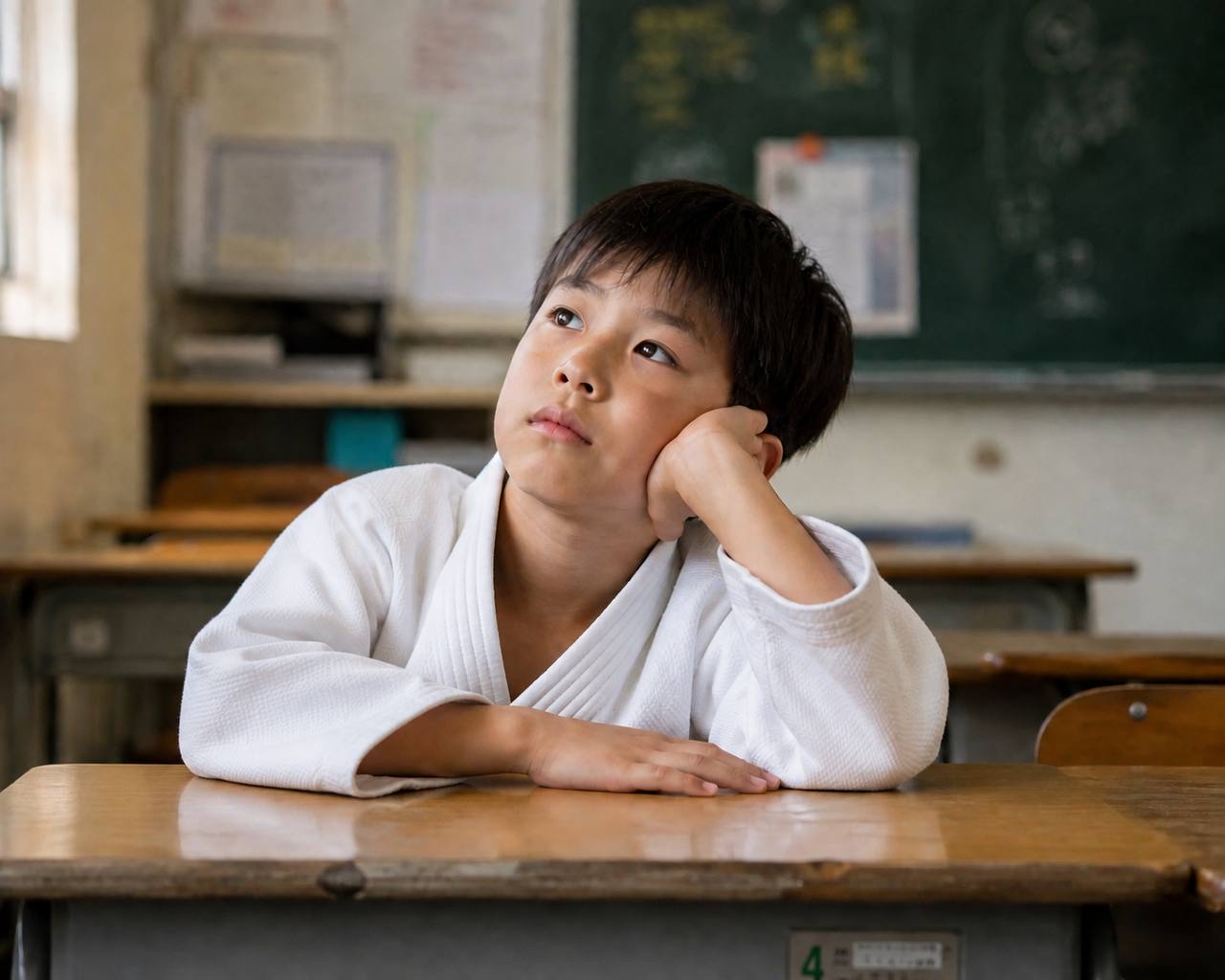
Judo should not be presented as a treatment for post-pandemic developmental difficulties. There is no evidence that judo can repair every social, language or developmental problem. It is, however, an activity built around real human interaction. Two children face one another, read movement, take turns as tori and uke, follow etiquette and rules, make controlled physical contact, lose balance, fall safely and stand up again.
A 2025 systematic review covering 22 studies found that regular judo training was associated with improvements in strength, endurance, speed, coordination, flexibility, balance and posture among children and adolescents. Most of the studies were observational, so those findings should not be exaggerated into a therapeutic claim.
Perhaps judo's most relevant contribution is simpler: it provides a structured environment in which children must genuinely cooperate with another person.
A new school year is also a return to living with others
For children walking back into school today, a new term is about more than a classroom. Playgrounds, sports halls, music rooms, clubs, team activities and dojos are all places where children learn how to live alongside other people.
The pandemic removed not only classroom hours but also a period of childhood that would normally have been filled with play, disagreement, cooperation, facial expressions and physical movement. That time cannot simply be recreated. But a new school year can offer more opportunities for children to meet, play, move and learn together again.
Sources
- Education Bureau — e-Bulletin for Parents, 31 August 2026
- Weng, Rong & Peng — Humanities and Social Sciences Communications, 2026
- Jangbarwala & Reichert — Journal of Research in Special Educational Needs
- Lee et al. — Early Child Development and Care, 2025
- Matsuo et al. — Pediatric Research, 2026
- Kowalczyk et al. — Journal of Clinical Medicine, 2025