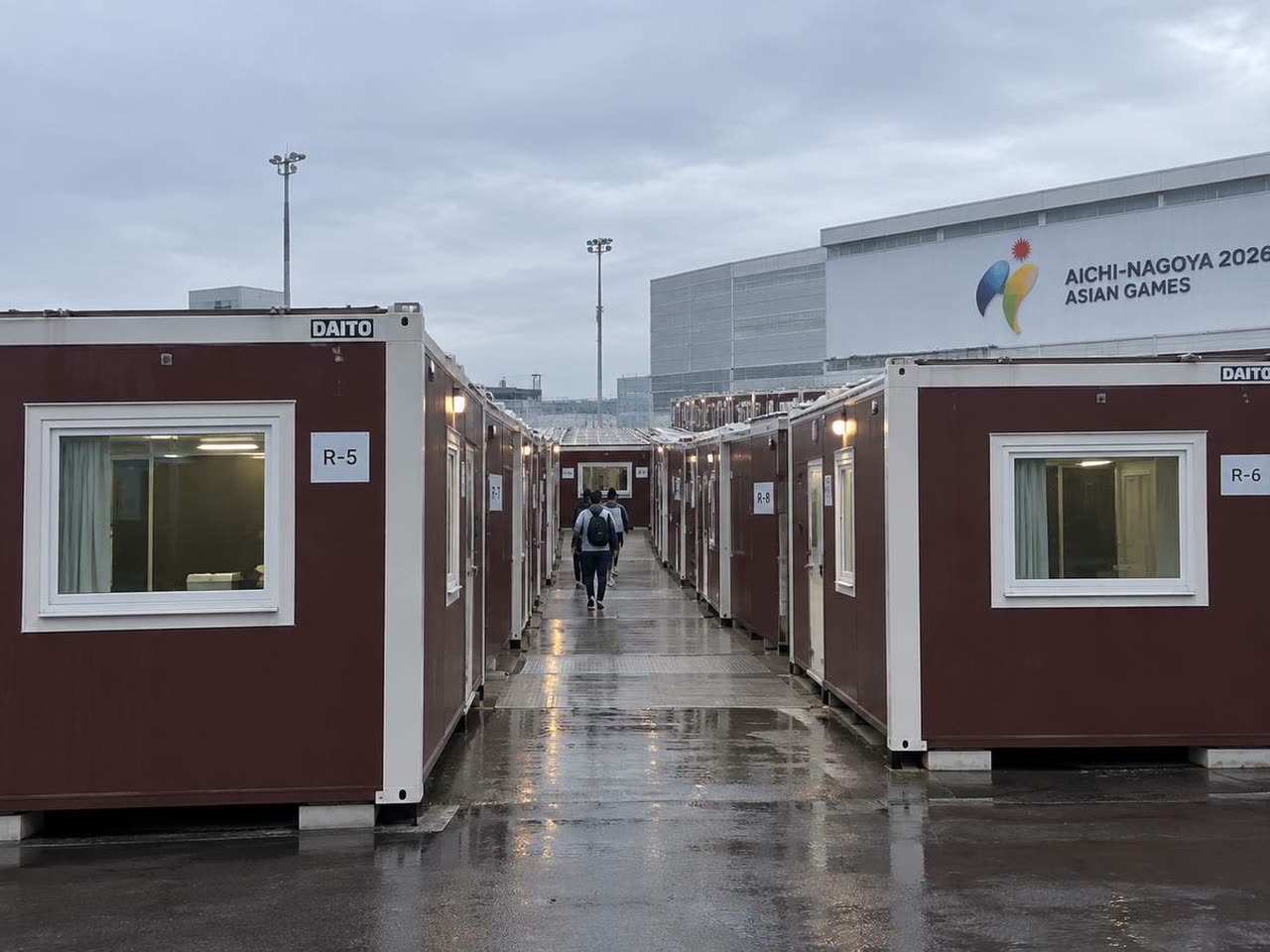
The 2026 Aichi-Nagoya Asian Games open on 19 September, but the accommodation arrangements have drawn days of criticism. The organising committee scrapped plans for a conventional athletes' village on cost and environmental grounds, and dispersed athletes instead among hotels, a large cruise ship and container-style temporary housing at Nagoya Port.
The accommodation is spread across about 40 sites, with more than 600 transport routes to competition venues and up to 720 buses a day. Some 200 wooden prefabricated container units at Garden Pier were meant to house about 2,000 people; the Italian cruise ship Costa Serena, docked at Kinjo Pier, takes 4,000 to 5,000; the remaining 9,000 were to stay in city hotels.
The problem is that the turnout outstripped the plan. The committee expected about 15,000 athletes and officials, but the number rose past 17,000 after additional events were confirmed in March, and the extra people were placed into existing accommodation, leaving too few bedrooms and exposing problems with the facilities.
Conditions in the container units are the focus of the complaints. Each unit measures about 70 square metres and can hold up to six people, who share toilets and showers, with single beds 1.95 metres long. Athletes and officials have described cramped space, and some rooms have leaked.
South Korea's men's basketball team arrived early for group-stage games. Guard Byun Jun-hyung, 30, posted a video on social media on 11 September showing water pouring from beneath a washbasin onto a soaked floor, appealing for help. Teammate Lee Hyun-jung also told South Korean media that the conditions were hard to endure.
Record-breaking rain in the Nagoya area in early September caused flooding, and about 400 athletes and officials staying in the container units were moved temporarily to higher ground. The committee said everyone returned safely with no injuries reported.
Transport has added to the complaints, with shuttle buses repeatedly getting lost or taking teams to the wrong destinations.
South Korean sports officials called the accommodation the worst they had encountered, and said 45 countries and territories had raised concerns with the organisers. Chinese media asked whether this was an athletes' village or a refugee camp. The committee maintains that suitable accommodation has been arranged for every registered athlete and official.
The Games run from 19 September to 4 October, with 469 gold medals across 43 sports. Judo takes place from 30 September to 3 October at the Aichi International Arena, where Hong Kong, China will field three men and three women.
Sources
The Korea Times, 17 September 2026:
VnExpress International:
JoongAng Ilbo (Japanese edition):