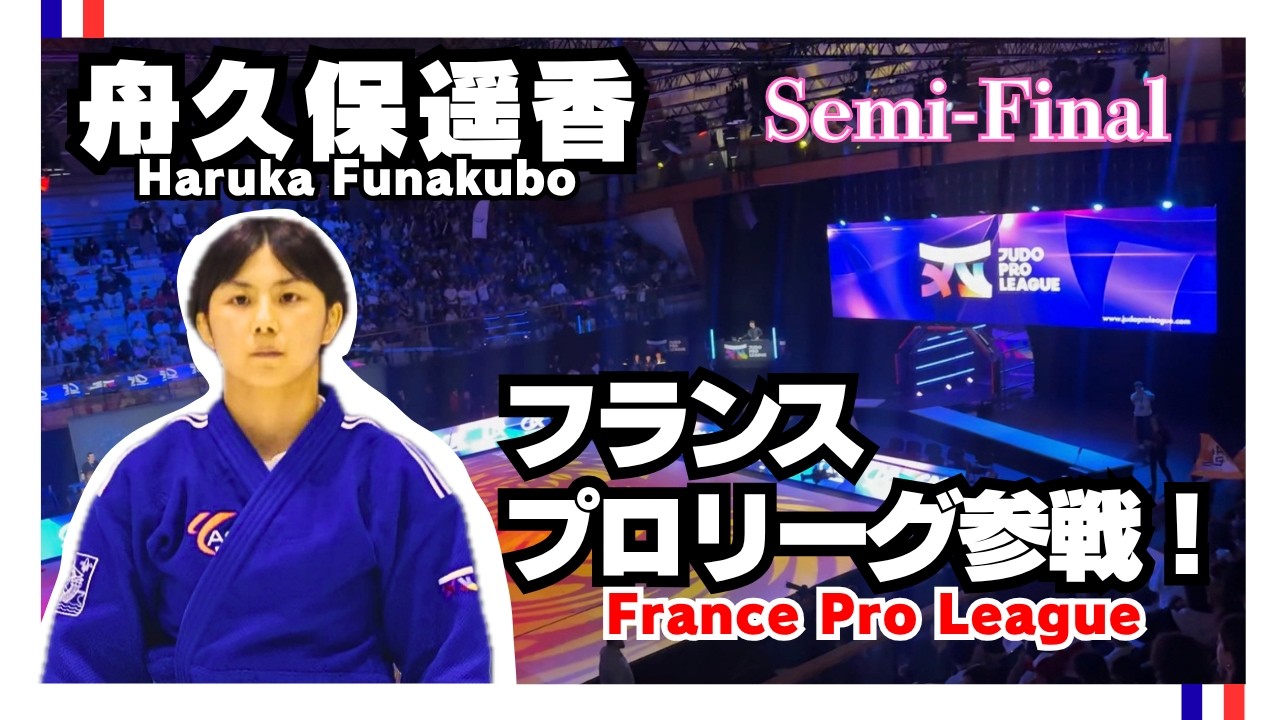
Japanese judo great Misato Nakamura recently published a video from the Final Four of France's Judo Pro League, with Paris Olympic bronze medallist Haruka Funakubo among the athletes in action for AC Boulogne-Billancourt. Yet the most interesting part of the story is not one athlete's result. It is the way France has turned team judo into a season-long league product.
Created in 2022, the Judo Pro League is France's first mixed professional sports league. The 2025-2026 competition brought together 18 teams, with each club contesting four fixtures, two at home and two away. The top eight advanced to the quarter-finals, with the winners progressing towards the Final Four.
Each team encounter is built around ten weight categories. The women's divisions are -52kg, -57kg, -63kg, -70kg and +70kg, while the men's divisions are -66kg, -73kg, -81kg, -90kg and +90kg. Men and women therefore contribute to the same overall team result, while clubs may also include foreign athletes within the league's roster limits.
The rules are also adapted for a live audience. Individual bouts last five minutes and include a 30-second mid-bout time-out. Drawn bouts are possible during the preliminary stage, while the knockout phase uses golden score. If a knockout team match remains tied after ten bouts, a weight category is selected at random for a deciding contest.
That scenario appeared in this year's Final Four. AC Boulogne-Billancourt and Arts Martiaux Saint-Gratien finished their semi-final level at 5-5. The randomly selected category was women's -57kg, sending Funakubo back onto the tatami. She defeated Mailys Rozan by waza-ari to give ACBB a 6-5 victory and a place in the final.
In the final against Judo Nice Métropole, Funakubo again made her ground work count, using juji-gatame to force Ophélie Vellozzi to submit. ACBB eventually won 6-4 and captured the title in its first Judo Pro League season.
Nakamura's video captures something official results cannot: the atmosphere. Spectators queued well before the action began, while music, lighting and a deliberately staged arena presentation gave the event a very different feeling from a conventional judo tournament.
For Hong Kong, that may be the most useful part of the French experiment. Most local judo competitions remain one-day individual events or traditional team contests. France shows that the core of judo does not need to change in order to present the sport differently.
Hong Kong would not need to copy the French model in full. A smaller local league involving clubs or dojos, mixed men's and women's teams, several competition days and a season-ending final could already create something very different from a tournament that appears once a year and then disappears.
The judo does not have to change. The way it is presented might.