
Overseas competitions, training camps and exchange trips are back on the calendar, and with them long hours in airports, hotels, stations and sports venues. The free USB sockets in those places are not only power sources: a USB connection can carry data as well, and that is the risk security agencies describe as juice jacking.
The FBI's Denver office warned in April 2023 that criminals can use public USB ports to introduce malware and monitoring software, and advised travellers to carry their own charger and cable and to use an electrical outlet instead. That warning was a general alert rather than a response to a newly reported case.
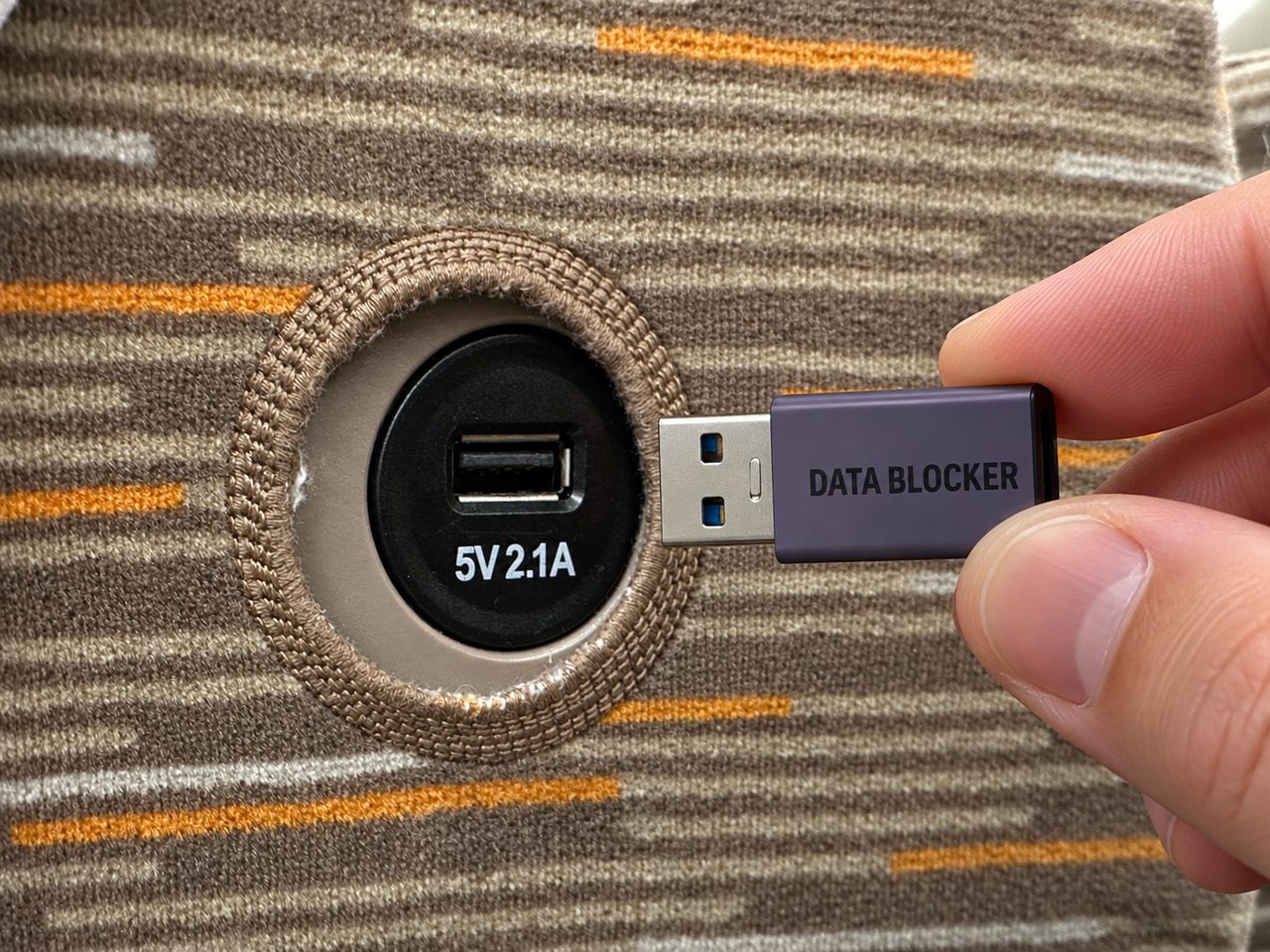
Hong Kong's HKCERT published its own warning in February 2020 and updated it on 24 July 2024. It recommends a power-only cable or a USB data blocker, your own USB charging adaptor, refusing any trust prompt that appears on the device, and using your own or a rented power bank.
In Singapore, the Cyber Security Agency and the Singapore Police Force issued a joint advisory in April 2023 that lists juice jacking alongside rogue Wi-Fi and Bluetooth attacks, and advises using a USB data blocker on publicly accessible charging ports and switching off automatic file transfer.
Research presented at USENIX Security 2025 pushed the risk a step further. A team from Graz University of Technology described ChoiceJacking, which bypasses the consent mitigations used against juice jacking. The researchers gained access to sensitive files, including pictures, documents and app data, on every tested device from eight vendors, and extracted files from locked devices from two of them. All but one vendor, among them Apple, Google, Samsung and Xiaomi, acknowledged the disclosure.
China's Ministry of State Security issued a warning of its own on 30 July 2025 about shared power banks. It describes hardware modified to open a data channel, prompts that push users to grant access such as "trust this device" or "allow USB debugging", and spyware, trojans or backdoors. It is an official warning about a threat model, not evidence that ordinary shared power banks are generally compromised.
For judo teams the practical order is: your own power bank first; your own charger and cable into a wall socket second; a data blocker if an unfamiliar USB-A port cannot be avoided; and no to any unexpected trust, data-transfer or USB-debugging request. The same applies in competition venues, team hotels and airports.
The warnings are precautionary. For a squad that keeps schedules, documents and contacts on one phone while travelling for days at a time, carrying your own power source is the simplest precaution to take.
Sources
- HKCERT — Beware of juice jacking when charging mobile phones at public charging stations (published February 2020, updated 24 July 2024)
- Cyber Security Agency of Singapore and Singapore Police Force — Joint advisory on protecting mobile devices from malicious wireless and wired connections (18 April 2023)
- USENIX Security 2025 — ChoiceJacking: bypassing juice jacking mitigations (Graz University of Technology)
- Ministry of State Security of China — warning on shared power banks (30 July 2025), carried by the Ministry of Justice legal information platform
- CBS News — FBI office warns against using public phone charging stations (11 April 2023)