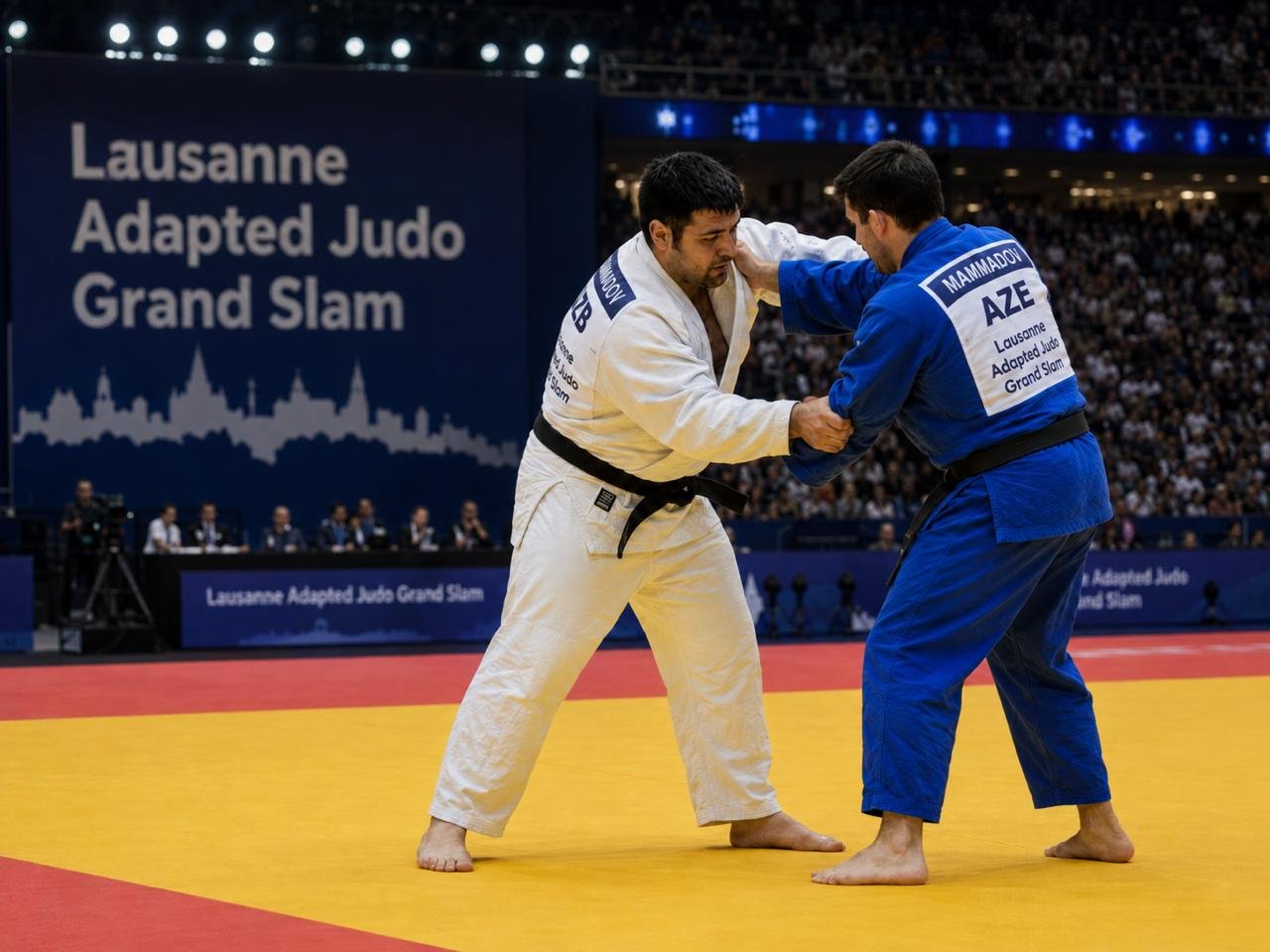
At the first Ecole Mont-Olivet Lausanne Grand Slam, adapted judo moved from plan to reality. On 28 August, adapted judo was staged inside the Grand Slam environment at the Vaudoise Arena, where the draw had been attended by IJF inclusion representatives. What had been announced in advance as a historic first became an actual part of the event.
The inclusion continued on 29 August, when deaf judoka from 14 nations began the first Ecole Mont-Olivet Deaf Judo Masters Top 18 in the same arena. Deaf judo uses the same core techniques and rules as conventional judo, but referees must adapt their communication: eye contact, gesture and touch can be essential. The Deaf International Judo Federation's president praised the referees for adapting their officiating on the first day of competition.
During the official opening ceremony, retired Japanese double world champion Joshiro Maruyama and Croatian adapted judoka Petra Orešković, an athlete with cerebral palsy, performed an adapted nage-no-kata together. The ceremony presented elite, adapted and deaf judo explicitly as one judo community.
The pre-event registration figure was 56 Level 1 and Level 2 athletes from 13 nations. The reality in Lausanne went further, with adapted and deaf judo sharing the highest stage of the World Judo Tour side by side.