
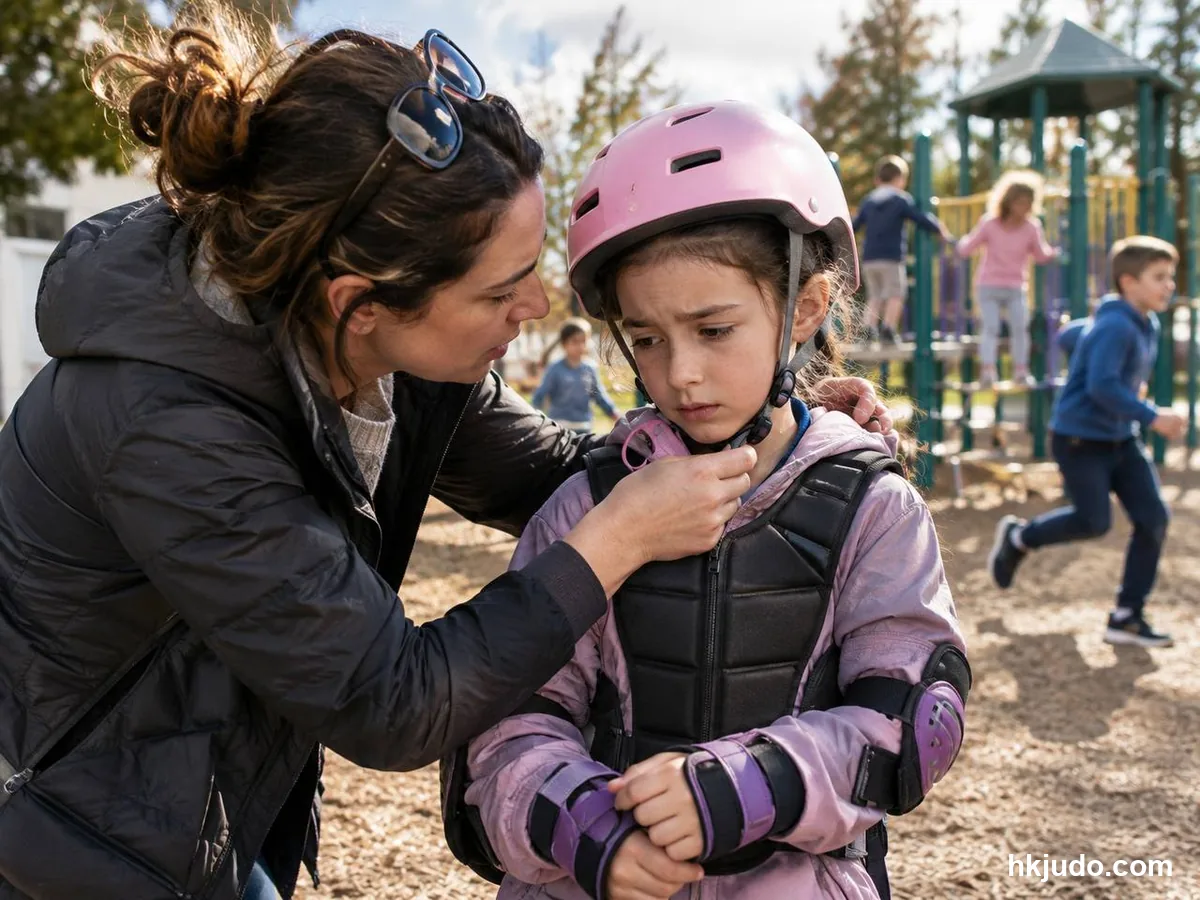
The clinical psychologist Roger McFillin argues that modern societies protect children too much in the name of safety and kindness, leaving the young less able to face failure and setbacks. The claim is not just opinion; there is research behind it.
The problem is not only parents. It runs through schools, education systems and the way a society treats risk, failure and psychological harm.
When a society tries to remove every difficulty from childhood, it may also remove the chances to build independence, confidence and resilience. The Canadian Paediatric Society's 2024 position statement cites Canadian organisations calling for a shift from 'as safe as possible' to 'as safe as necessary', so that children learn through appropriate risk.
How strong is the evidence?
- 231 studies (2026 meta-analysis): covering more than 150,000 people aged 13 to 25, intrusive parenting was positively associated with anxiety, depression and externalising behaviour. On a scale where 0 means no link and 1 means a perfect match, the correlation was about 0.2: a slight but consistent link, clear in the overall trend, while individual children still differ a great deal.
- 53 studies (2024 helicopter parenting review): over-involvement was linked to lower self-efficacy, emotional regulation and academic adjustment, and to more psychological distress.
- 1,074 Hong Kong adolescents (three waves): maternal overprotection predicted higher later anxiety through increased parent-child conflict, and adolescent anxiety could in turn prompt more parental involvement.
These are not trivial studies, but the associations are small to moderate. They do not mean every overprotected child will struggle, and they do not prove that every relationship runs one way.
How did society get here?
Three changes matter most:
- Teaching children to solve problems became solving problems for them. The child fails and an adult steps in; the child argues with someone and an adult intervenes. Practice at independent judgment disappears.
- Avoiding real harm became avoiding all discomfort. The psychologist Nick Haslam described this in 2016 as 'concept creep': the definitions of trauma, bullying and harm steadily widen. The widening is documented, but it is not itself evidence that mental illness has increased.
- Building capability became pursuing zero risk. A 2026 systematic review of 74 studies found age-appropriate risky play positively associated with confidence, resilience and self-regulation, though the quality of the evidence remains limited.
Schools show the widening most clearly. A bump or a quarrel between classmates is quickly filed as bullying; a child who is low and reluctant to go to school because a close friend has moved away may be treated as traumatised. Real bullying must be taken seriously, but when every unpleasantness carries the label of harm, children do not learn to handle conflict; they learn to settle into the position of victim.
What judo offers
This is why judo education matters. In a safe, disciplined setting a child can fall, lose a contest, face an opponent stronger than themselves, and try again. Research on sport also supports a positive link between physical activity and children's mental health and social development.
Does overprotection make the world worse? It is a well-evidenced problem worth taking seriously, but it is not the sole cause of today's social problems. A 2026 OECD report also points to digital life, economic inequality, academic pressure and bullying as factors in adolescent mental health.
McFillin's central point: we want children to grow up able to face reality, yet throughout their childhood we keep stopping them from coming into contact with it.
What must be avoided is serious harm, not every setback. Protecting children from harm is an adult's duty; so is teaching them to face difficulty.
The studies cited here mainly provide correlational evidence and cannot establish that all current youth mental-health problems stem from overprotection.
Sources
- 231-study meta-analysis (2026), Clinical Child and Family Psychology Review
- 53-study helicopter parenting meta-analysis (2024), Journal of Adult Development
- Three-wave study of 1,074 Hong Kong adolescents
- Canadian Paediatric Society position statement (2024): outdoor risky play
- 74-study systematic review of risky play (2026), PLOS ONE
- Nick Haslam (2016): Concept Creep, Psychological Inquiry
- The original essay (Radically Genuine, 25 June 2026)
- OECD (2026): Child, Adolescent and Youth Mental Health in the 21st Century