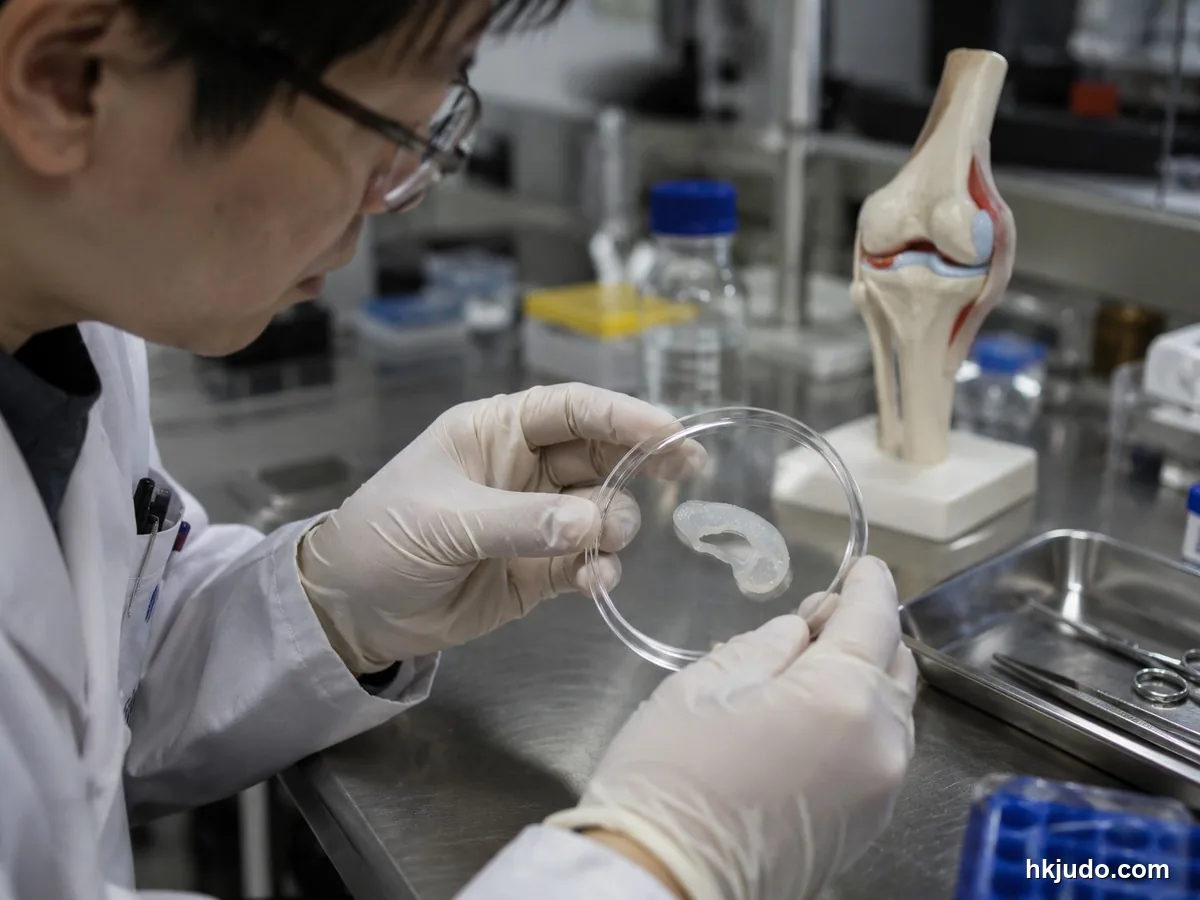
Two teams have reported regrowing joint cartilage. At Stanford University, blocking an enzyme called 15-PGDH made cartilage grow back in the knee joints of ageing mice, and prevented osteoarthritis in animals whose injuries mirrored anterior cruciate ligament (ACL) tears. The results were published in Science in November 2025.1,2
Cartilage tissue taken from patients during knee replacement surgery also responded to the treatment in the laboratory and produced new cartilage.2
Separately, Northwestern University reported in 2024 that a biomaterial applied to damaged cartilage regrew high-quality cartilage in the knee joints of sheep within six months.3
Judo passes force through the knees, shoulders and elbows: throwing, pivoting and explosive entries all load the joints. ACL and meniscus injuries cut competitive careers short and raise the risk of knee osteoarthritis later. A meta-analysis in the British Journal of Sports Medicine put the increase after knee injury at four to six times.4,5
Neither treatment has been tested for cartilage in humans yet. A 15-PGDH inhibitor is in clinical trials for a different purpose, age-related muscle weakness. Prevention, sensible training load and rehabilitation after injury remain the measures that work today.2
If the methods hold up in human trials, they would matter most to people who train for decades: retired judoka still living with knee pain, coaches, and recreational players who want to keep stepping onto the tatami.
Sources
- Science: Inhibition of 15-hydroxy prostaglandin dehydrogenase promotes cartilage regeneration
- Stanford Medicine: Inhibiting a master regulator of aging regenerates joint cartilage in mice
- Northwestern Now: New biomaterial regrows damaged cartilage in joints
- British Journal of Sports Medicine: Injuries in judo, a systematic literature review
- British Journal of Sports Medicine: Knee osteoarthritis risk is increased 4-6 fold after knee injury