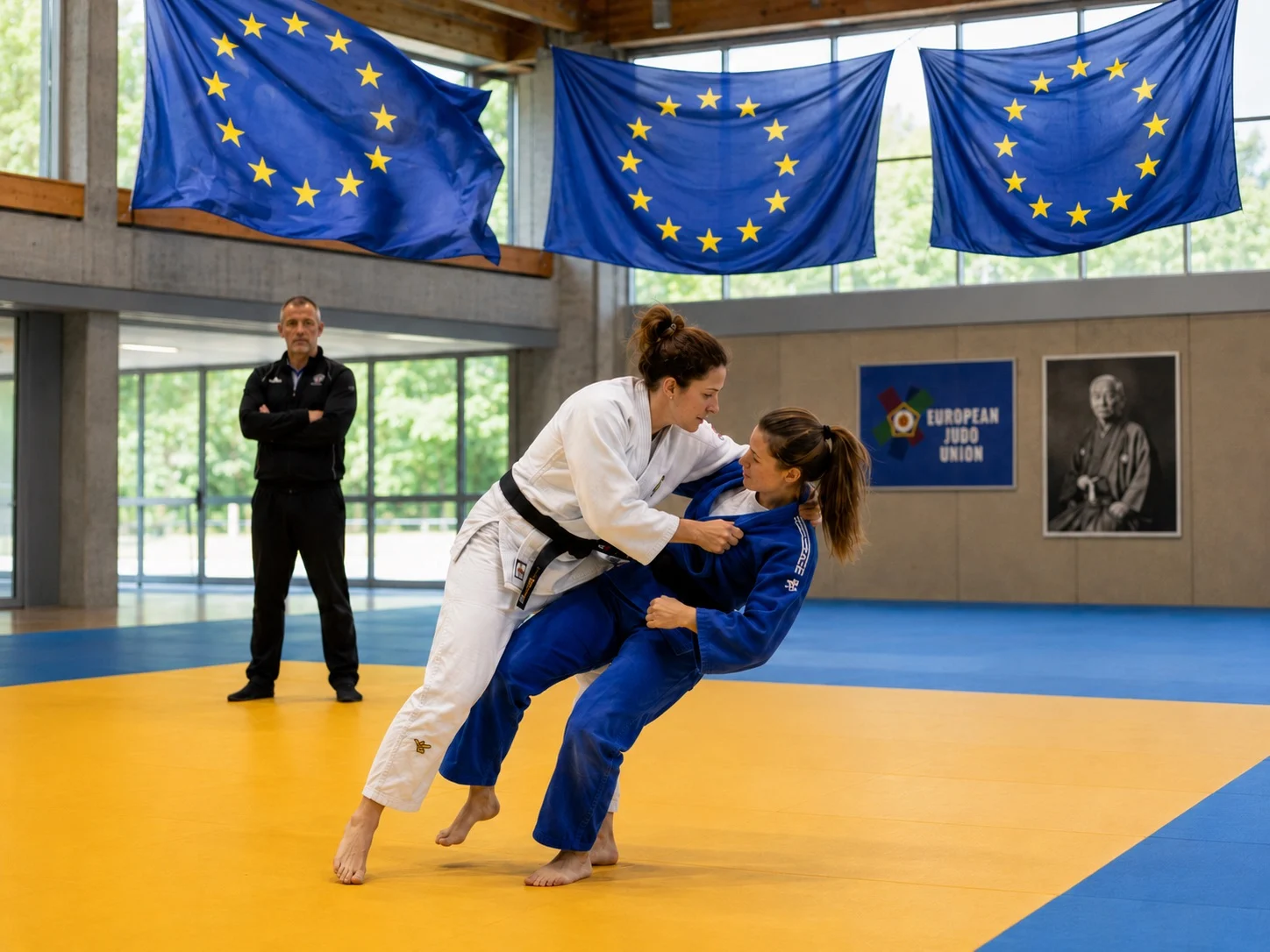
Recent updates from the European Judo Union show a clear direction for European judo. The conversation is no longer limited to medals, finals and rankings. Safe Sport, human rights education, uniformed services championships and IJF Academy self-defence education are becoming part of the wider judo agenda.
On 6 July, the EJU published key takeaways from the 2026 EJU Human Rights Assembly. The online conference was held on 3 July under the theme “From Values to Action - Shaping the Future of Safe, Strong & Inclusive Judo”. According to the EJU, 126 people registered for the event, with 72 attending live from 39 countries and regions.
The topics covered were wide-ranging: safeguarding, inclusion policies, mental health, gender equality, youth voice and how judo values can be turned into practical action inside clubs, dojos and national federations. These subjects may not attract the same attention as a World Tour final, but they are essential to the long-term health of the sport.
Another major development is the inaugural European Judo Championships of Uniformed Services, which will take place on 22 and 23 August at the University of Wolverhampton’s Walsall Campus in Great Britain. The event is open to athletes representing uniformed services, including the military, police, fire and rescue services, paramedics, customs, border guards, coastguard, prison services, mountain rescue, disaster management and civil protection.
This is more than a new competition category. Judo has a natural connection with discipline, responsibility, decision-making under pressure, respect and self-control. For people working in uniformed services, those values are directly linked to their professional lives.
The EJU also reported on the IJF Academy Judo for Self Defence Instructor Course held in Malta from 2 to 4 July. The course brought together 26 participants from Hong Kong, Canada, South Africa, the United Arab Emirates, Europe and other regions. Its curriculum was built around judo-based self-defence, with emphasis on balance, leverage, body movement, control, distance management and situational awareness.
For Hong Kong judo readers, this direction is worth noting. A healthy judo environment cannot be built on competition results alone. It also needs safe training, educated coaches, clear safeguarding ideas, opportunities for different groups to participate, and a better understanding of judo as a form of education.
Source: European Judo Union
- European Judo Union: A New Blueprint for Safe Sport
- European Judo Union: European Judo Championships of Uniformed Services
- European Judo Union: IJF Academy Self-Defence Course
More judo news in English and Traditional Chinese from Hong Kong Judo.